Showing posts with label Games Industry. Show all posts

Thursday, June 30, 2016

Gems of Opportunity: Games Industry Concept: "Game Modes Sold Ala Carte at Retail"


Hello All,

I just made it by the hair of my chinny chin chin, but here is this month's unique creative conceptual design. Finding opportunity in a constructive manner to promote commerce and goodwill as potential innovative solutions. To date this blog site of "Atrayo's Oracle" has 202 such conceptual designs since 2005 online. As freely available for any Innovator or ambitious Venture Capitalist to sift through the dozens of eclectic industries. (ie commercial business models, inventions. nonprofits, legislation, and military initiatives) These are just the primer in summary abstract form and not necessarily the whole shebang, that would make it too easy.


Today's original (as far as I know) games industry conceptual design solution is to bring full circle how video games were released in the early 2000's. Part nostalgia and part additional revenue streams for game publishers to offer an assortment of game modes ala carte to consumers. What I mean by Ala Carte Game Modes are the: single player campaign missions, multiplayer mode, mini-game modes, and the modders editor toolset (for creating grass roots level designed game maps for whichever game mode).

For those who may not recall what it was like in the early 2000's playing PC games besides the video consoles. When typically a FPS (1st Person Shooter) was released at retail it consisted of a: single player campaign, multiplayer maps, and a modder editor toolset. All of that at the standard price point of $50.00 US. Today when a FPS game title is released at least from EA (Electronic Arts) game publisher it only releases a multiplayer mode. The price point is split between 3 tiers of standard at $59.99, deluxe at $79.99, and collectors $120-140.00 being online download (standard / deluxe only) and as a physical boxed unit. No discounts between a full physical retail unit and completely a game download. I'm surprised why game publishers haven't charged a premium for a physical retail boxed unit to date? Perhaps to dissuade consumers on the environmental costs of selling a boxed unit would be the rationale.

In the early 2000's there were game expansions and not DLC's (Downloadable Content). However today's game season pass could be presumed to be a full game expansion. About 6 years ago a DLC pack went for $9.99 US nowadays with hyperinflation its $14.99, and perhaps in another 5 years time they'll cost $19.99. The Season Game Pass is rather a newer retail phenomena utilized by game publishers such as EA which I'll use as my prime example. Season passes for games have been around 2 to 3 years retailing usually at $49.99 US, with an extra included DLC pack sold on the house as free.

Back on June 10th, 2010 I made a Prophetic Call that Electronic Arts was going to ditch the modder editor toolset with FPS games. Will DLC Spell The End of the Modder Community?

I went on in that short commentary to raise the alarmist flag that EA was pulling a fast one on gamers. This is when "DICE's Battlefield Bad Company 2" was the preeminent FPS game back in 2010. Ever since that time modder editor tools in a FPS game title have gone the way of the dinosaur. (No relation to "Ark: Survival Evolved") :op

My conceptual design is to remedy this for a game publisher. With a quasi revival whilst expanding game units sold albeit with altering game modes of the identical game franchise version offered at retail. For example let's say EA on behalf of Disney's "Star Wars Battlefront" game franchise. Will develop a 4th installment of the "Star Wars Battlefront" series. (which it is confirmed they're doing so, however not how I'll explain it in this example) Let's continue to speculate it'll consist of the Star Wars movie saga episode 7 (2015) onwards in science-fiction operatic lore.

By doing either a Super Release product cycle offering or a Stair Stepped offering at retail. In the Super Release a game publisher such as EA hired by Disney to release "Star Wars Battlefront 4". With multiple game mode iterations of the identical game ala carte (ie meaning piecemeal). For instance an RPG single player campaign mission arch, FPS multiplayer game mode, MOBA (Multiplayer Online Battle Arena) Strategy game, an assortment of mini-games for the mobile market, and modder map editor tools for PC gamers. (In any game mode retail iteration would the mod tools work for in PC and mobile platforms. The video console gamers would be omitted due to the manufacturer's saying "No" to such a notion.) All game mode versions sold simultaneously as a version of Shock and Awe for gamers to gobble up in festive joy.

A game publisher can task multiple inhouse game studio's to each handle a different game mode product iteration at retail. However all game mode iterations can share unique cross-pollination of game metrics and achievements by player account. What I mean by this is what a player on their own secure registered game account with the game publisher. Does in one game mode let's say the RPG campaign can have an impact in the turn of events in a meta sense within a FPS multiplayer game round. Every player would only see their game achievements mirrored back to them. It isn't necessarily shared with other concurrent players on their respective game client in a multiplayer game mode. (ie FPS, Strategy, etc...) Any in-game currency earned can be pooled also with all purchased game mode iterations a gamer may have unlocked on their account.

For the Stair Stepped product cycle offering at retail sounds exactly how it means. Let's say EA releases 1st the "Star Wars Battlefront 4" set in episode 7 of the movie saga. With an RPG single player campaign mission arch Sold One Full Month between subsequent game retail launches. So on month 2 the FPS multiplayer game mode is sold at retail for gamers, whichever platform they use. At month 3 the MOBA Strategy game mode is sold, at month 4 the mini-game assortment is sold for the mobile market, and at month 5 the full (for whichever game platform mode) modder game editor toolset is sold. The Season Passes can each be offered per individual game mode or offer an Ultimate Season Pass for all game modes purchased by the consumer / gamer on their account. By recalling a Season Pass is compromised of 5 or so DLC packs depending on their release schedule.

This games industry conceptual offering is meant to offer gamer interest variety per game genre. Perhaps only certain gamers will be interested in only one game mode and not others. Some of said just as much in regards why single player campaign missions have disappeared from the FPS game offering. However in this suggested proposal the single player campaign mission arch would be RPG (Role Playing Game) and not FPS for instance.

Inasmuch as a revival is meant to be created in a circular nostalgic game product offering to consumers. So another generation of gamers can sorta rekindle the joyous past time of enjoying multiple versions as in game genre's of the identical game offering. Making marketing budgets by the game publisher stretch that much further especially with a stair stepped game mode release schedule. Short of creating a dedicated MMO (Massively Multiplayer Online) game this would be the diversity of game genre's consumers are always demanding from game publishers. Offered ala carte each to their own game mode interest within the game franchise it is presented within. This easily so to speak gives the gamer the consumer choice many have been asking for many years now. Let's hope the suits in the games industry are paying attention and have their curiosity piqued.

Ivan "Atrayo" Pozo-Illas, has devoted 21 years of his life to the pursuit of clairvoyant automatic writing channeling the Angelic host. Ivan, is the author to the spiritual wisdom series of "Jewels of Truth" consisting of 3 volumes published to date. He also channels conceptual designs that are multi-faceted for the next society to come that are solutions based as a form of dharmic service. Numerous examples of his work is available at "Atrayo's Oracle" blog site of 10 years plus online. Your welcome to visit his website "Jewelsoftruth.us" for further information or to contact Atrayo directly. 

Saturday, March 26, 2016

Gems of Opportunity: Matchmaking & Games Industry Concept: "A Social and Romantic Matchmaking Genre Role Playing Game"


Hello All,

There are a myriad of video games out in the world that have a subliminal Death Wish for our civilization. In the other spectrum there are lesser known often lewd and pornographic dating video games online. Nothing except perhaps the series of "The Sims" published by "Electronic Arts" of "Mr. Will Wright" game designer fame. Has there stood a near family friendly sort of popular video game for audiences of all ages. 

My conceptual design today is just an early notion into marrying both a social matchmaking features found online. Be it: eHarmony, Match.com, Friend Finder, and so forth that are non-pornographic and free of lewd tendencies mostly. With that of a multiplayer or MMO (massively multiplayer online) game world found today that is F2P (Free to Play). Although free to play for adults with a valid credit card much like a dating website. If players were to seek each other out in real life there can be safety features included like in any regular matchmaking dating website service. Such as passing a Real ID background check to see someone doesn't have a criminal history and so forth. 

Instead of interfacing with a matchmaking website in plain 2D (dimensions). One can have a dating or matchmaking video game world in first person, third person, and/or isometric overhead viewpoint. This would be a niche audience and not tailored towards minors such as teenagers. More so for adults seeking a family friendly clean outlook free of the sleazy filth found elsewhere online. 

Like with any dating or matchmaking website its free to enroll as a member. However to get better features one has the option to become a paying member at various membership tiers. In many ways several game publishers with MMO game titles have done similar over the years. With F2P game titles with optional subscriber plans for paying members. Being offered more convenience, greater status, and other pertinent rewards in games. 


I would hope such a MMO or multiplayer game title would be more than just finding romantic partners. To venture into social friendships which can include even finding like minded people of a similar spiritual or religious faith in such a setting. A social hub matrix can be part and parcel of the game design elements of the feature rich game world. Bringing people as players together in virtual fictional settings be it with celebrations or other forms of common game play. Not to make such a game world like a "Candy Land" of wishy washy game setting. There can be real world dilemma overtones to entertain as much as to build shared engagement in such an online community setting. I won't go too much into game design particular features just state the general theory behind such a project if one were to be created overall. 

There can be an added social cause layer added to such a game world and to reveal some real world personal character traits of a person. Many know of the Griefer term as a player that causes turmoil to others as a sadist for instance. What if quite the opposite behavior is encouraged in such a game world by revealing in game play the best cooperative traits of a real person. This will take some sort of social engineering and psychology involved to design game play elements that approach such a would be process. 

The reason why to shine a light on a person's truer disposition instead of the traditional alter ego. Is much like crowdfunding for social causes online. What if in such a virtual fictional game world setting for a MMO or multiplayer game title. There are zone wide events that mimic the plights of International, National, or Regional real world charities. This will be part education to the community of players of the struggles facing such social causes in the real world. To portray them in a game world not just to spice up game play for example. But to actually generate a Crowd Sourced Fundraising Drive In-Game. Like in many other MMO's have accomplished from player contributions collectively. 

These real world charities will be vetted by the game developer / publisher and perhaps selected by the community of players themselves. Of course game storyline plots and any unique content must be planned for ahead of time like a pipeline delivery system. Although an auto-generated game content engine would go a long way to remove some of the burden from the developer. For on the fly generated game play events that occur randomly or are tied to choke point quest (mission) based instanced game play.

Allow me to list some examples a Tsunami event in the real world can have the game world and community of players up to 90 days later. Have game world content that mimics the environmental catastrophe as it's happening and the after effects in rebuilding. This would make the game a quasi simulator as it draws real world parallels of the dilemma's faced elsewhere for humanitarian issues. Another example can be the war torn plight occurring for the last couple of years in Syria. Having large swaths of humanity displaced because of war and famine has been our ancestors history for tens of thousands of years. To create such a zone or zones in a game world for the "United Nation" charities for war torn refugees be they women and children. Or to help fund the existing burgeoning camps in: Jordan, Lebanon, Turkey, and now Europe. 

This may be too much reality but heck present day game worlds are excellent at showcasing destroyed civilizations and Diaspora's. Like I mentioned at the top of this concept game publishers have a subliminal death wish for our civilization. Although in their defense they are giving gamers what they want. What if giving us what we need instead feeds our minds and hearts in a greater capacity, wouldn't that be a truly novel idea in a matchmaking game world. By attempting to reveal real world personal character traits of real people in game play. Yes, it might sound naive and can easily be faked, but given the opportunity it can still be harnessed by connecting people together virtually and perhaps in the real world too. 

Ivan "Atrayo" Pozo-Illas, has devoted 21 years of his life to the pursuit of clairvoyant automatic writing channeling the Angelic host. Ivan, is the author to the spiritual wisdom series of "Jewels of Truth" consisting of 3 volumes published to date. He also channels conceptual designs that are multi-faceted for the next society to come that are solutions based as a form of dharmic service. Numerous examples of his work is available at "Atrayo's Oracle" blog site of 10 years plus online. Your welcome to visit his website "Jewelsoftruth.us" for further information or to contact "Atrayo" directly. 

Thursday, November 14, 2013

Games Industry Store Policy Concept: "Treating Game Cards Like Lotto Scratch Off's At Retail"

Hello All,

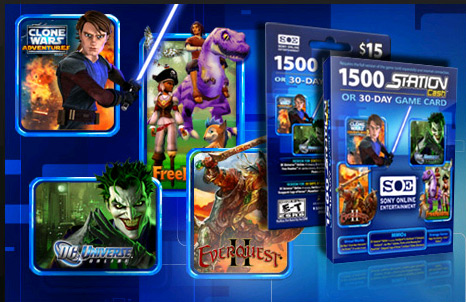
Today's concept is more so a common sense retail store policy that is long over due. For nearly a decade now game publishers first introduced on retail store shelves like in "Walmart or Best Buy" game cards as a product. Basically a Game Card is a highly decorated piece of card board with a very much lauded crucial hidden code. The code is layered under that latex like silvery substance you see on Lotto game scratch cards. What the game card code buys is either proprietary currency from the game publisher. Or a month's worth subscription to any particular MMO (Massively Multiplayer Online) game they may offer. 

Here below is a picture from "Sony Online Entertainment" (SOE) game card as how it would sorta appear on a retail store shelf.


Such game cards appear in a card board deck as a promotional display usually within the video game sales department. For years this is how they have been presented and sold at retail spaces. The danger is either unattended minors or professional shop lifters just scratching off the game cards and thus stealing the highly prized codes. When I first learned about such a product within stores I was astonished that these game cards weren't placed under the sales counter. Now years later when I venture into the video games department I see littered scratched off game cards. Plundered like booty by young or older devious gamers that literally game the system (pun intended) by stealing such retail codes. What can be far worse is potentially criminal thieves stealing dozens of these unattended retail game cards and grabbing the codes. Where like a ticket scalper they hawk the codes at a lower price point reselling them creating a cottage "Black Market" before they've ever been sold!

What this denotes is a game publisher and the retailer not fully comprehending the jeopardy they're in with legitimate sales. This can drive up incidents of stores returning damaged or in this case tampered merchandise back to their wholesale distributors. Not to mention putting your customers through the ringer by having them explain at your store what happened upon returning the product.

Case in point I heard of a testimonial from a community guild mate of mine within our forum site. He went to his local "Walmart" store here in the States and purchased several SOE Game Cards like the one shown above. When he arrived home and began to input the codes he received errors that the codes have already been claimed. I'm sure his frustration only grew from there when he called the SOE customer service department in California. (note they do not have a toll-free phone number) He was told his only recourse is to return the tampered game cards to the retailer. In part as a first time buyer of these tampered game cards he certainly feels jilted which his only fault wasn't being careful. However sincerely this wasn't the customers fault it was both the retailer "Walmart" and that of SOE. Consider how many non-gamers buy these game cards as a gift for children or other adults to enjoy. Only to hand them a tampered used game card without knowing any better. A major insult to injury I say.

Thus this Store Policy Concept is born where hopefully those industry insiders or Venture Capitalists that may happen to read my unique blog site take notice. Opportunity is afoot. Below I'll explain three potential solutions that game publishers that can provide guidance to their retail partners.

First, train your sales cashiers that ring up your customer transactions to spot a tampered game card. If it's been scratched off by a thief its no good to your customer. This one step alone will save the store a drama with your customer by having to return a tampered game card. A customer service situation averted is a customer service incident saved from ever needing to occur.

Second, if game publishers or retailers insist that product placement within a video game department has to stay the same. Then train your store management, stocking employees, and electronic department attendants to keep on the look out of any tampered game cards on store shelves. To immediately remove them as encountered before a hapless customer purchases one. Also, to keep very vigilant of any store thieves stealing codes in that department. They may also take the product into the store bath room and lift potentially dozens of game card codes. Then subsequently dumping the tampered game cards into a random store shelf hallway. To be replaced by staff on its proper shelf not realizing that it was tampered. Or the code thief could just not even care by being that sneaky in effort and leave countless game cards in the bathroom area itself.

Third, this is the most Ideal Method to place the game cards behind a sales counter display or secure area shelf. Much like a Lotto game Scratch-Off that are prominently displayed next to the cigarette cartoons and porn magazines. (ie convenience stores like "7-Eleven") This way the game cards aren't a temptation for unattended minors or thieves from stealing the codes. If this means paying retailers extra to place such merchandise behind the secure sales counter it will be worth it. Saving yourselves the headache and your customers as well for being the point man in dealing with such cases of unnoticed code theft in regards to customer service incidents.

Basically this is a clear case of a lack of understanding of the gamer sub-culture in popular society. Where game publishers offering a convenience to their customers in a store retail environment. Just having them placed in an unsecured location on a store shelf. This sort of retail store neglect and free for all by thieves has been ongoing for numerous years now. Game publishers are partly to blame for not providing their retail partners clear guidance on product placement. I suppose game publishers have lacked this fore sight since they sell their game currency and game subscriptions in a secure E-Commerce outlet.

I hope this games industry store policy concept is of help to major big box retailers and game publishers. Since your small business hobby store owners probably already have the better common sense by avoiding the mistakes your committing at point of sale opportunities.

Thursday, August 29, 2013

Games Industry Concept: "Multiplayer Scalability as Middleware Game Software Suite"

Hello All,

Those of us as avid gamers be it on the PC/Mac or a video game console have had our noses against an artificial ceiling imposed by game publishers. What I mean for over a decade if not more multiplayer games as mostly FPS (First person shooters) combat games. Have only offered an upper limit of 64 (32 vs. 32) players per game round on a server. This Status Quo has created a vacuum of Opportunity for an enterprising game software company, if not a collective of grass roots coders / modders.

Game developers be they: DICE, Infinity Ward, Treyarch, Bungie, etc... Have forced fed gamers an artificial scale of multiplayer game play for far too long. Their reasons however have been valid to a point, be it restrictions on game development of time, resources such as labor and money, or plain lack of will power and vision in the final game design document. This game industry attitude has been prevalent for a dozen years now since the very first multiplayer games were 8 (4 vs. 4) players. Soon they leaped to 16 (8 vs. 8) and again they doubled over the years to 32 (16 vs. 16). Here's a little history the very first modern era multiplayer was on the "Atari ST" video game console for a game called "MIDI Maze". It debuted in 1987 and allowed up to 16 players to play together. Fast forward to the classic "Doom" in 1993 that allowed up to 4 players simultaneously. Where just a year prior in 1992 the father of the modern FPS shooter "Wolfenstein 3D" debuted by ID Software and Apogee Software as the publisher.

Now let me bring you closer to our early 21st century whereby a visionary game developer known as "Zipper Interactive". On the "PlayStation 3" console created a ground breaking FPS 256 Multiplayer Game Experience server side. The game is known as "MAG: Massive Action Game" that game title came out in 2010. I'm sad to say "Sony Computer Entertainment" the ones that support all things "Playstation". Bought out the once independent game developer and have shuttered them last year or so. The "MAG" multiplayer game servers will be shut down on January 1st, 2014 for good.

Aside from MMO FPS game titles such as "Planetside 1 & 2" brought to us by "Sony Online Entertainment". If not the MMOSIM known as "War World II Online" brought to us by game developer "Cornered Rat Software" with mixed results. Are the outstanding larger scale mutliplayer game experience that are combat shooter related known to the global consumer market.

Do take heart during my research for my innovative concept today I was pleasantly surprised it wasn't original. To say a Swedish non-profit staffed by 25 people created a Middleware Game Software that includes ground breaking multiplayer scalability. They're known as "Much Different".


Much Different "Man Vs Machine" (Link)

What "Much Different" accomplished took them 2 years to build and that was a 1,000 player internet browser FPS game. (technically they only got 999 players) They have moved onward to having supported "Battlestar Galactica" by game publisher "Big Point". Besides having recently been picked by "Behaviour Interactive" for the MMO of "Warhammer 40,000: Eternal Crusade". Press Release (Link)

What I thought up as a innovative concept still stands as a market opportunity beyond that of a Visionary non-profit Swedish game software company. I would hope a competitor anywhere on this globe of ours could give "Much Different" a run on its world class multiplayer experience. Again I reiterate a game software company or a collective of like minded grass roots coders / modders could launch a venture in this direction.

This is what I a futurist innovator had in mind a software company or grass roots group offering an open source middleware of game utility software suite. Produces a demo that provides a 128 (64 vs. 64) FPS multiplayer game server experience. The demo could even provide a bare bones simplistic FPS multiplayer game as a proof of concept of said technology. That way anyone world wide could patch together either a rudimentry or sophisticated multiplayer game experience. That would Frickin Shame Game Publishers to jump on this Middleware Band Wagon. So tomorrow's FPS or even RPG games like "Neverwinter Nights" fame could have beyond the stagnant 64 (32 vs. 32) multiplayer game server experience.

The middleware game software suite can literally scale upwards to support 256 (of "Zipper Interactive" fame), 512, or even 1024 game multiplayer experiences. Such a software game company could go on to offer consultancy services to supplement their revenue needs.

Here is the (Link) to Pikkotekk multiplayer game technology experience provided by "Much Different" as an example. I believe they are coding in a language called "Unity" for their platform of choice.

If ambitious grass roots coders / modders did come together for such a open source venture. Their offering is only open source for non-commercial usage. So corporate clients would pay market driven license fees to use the middleware game software developed by their efforts. Where everyone else in a truer open source initiative becomes the guinea pigs. To test and help develop such a middleware software suite according to their specific project needs.

Like I've stated prior the Market Opportunity is here now! "Much Different", shouldn't be the only off the shelf middleware game software provider globally. For such a game technology that would otherwise be developed in-house by game developers. "Much Different", even has launched a kiddie MMO for toddlers called "Badanamu World"(Link) for the South Koreans from what I understand.

So who else in Europe, Asia, or in the United States is bold enough to pursue such a vision to break the dozen years multiplayer artificial barrier from the games industry?


Monday, January 16, 2012

Academic Profession Concept: "Modern Game Art & Science Historian"

Hello All,

Time to time I may produce a concept that would seem a miss or a zinger from the eye of the visionary. Today's entry is no exception to this rule. I am casting a wide net with a forecast not to come perhaps 10 to 15 years from now by my prediction. I can be wrong where it comes sooner rather than later, time will tell.

As a niche outlet of academia in regards to the modern entertainment games industry. Where today colleges and some universities are offering accredited degree programs. In area's of game design, game programming, if not game business enterprise such as marketing and public relations. Right now there are many arena's where modern gaming is finding outlets in economics, sociology, healthcare, psychology, medical research, and finally military applications. Be it physicians offering patients a game so as to instill in practice a non-local sedative throughout the course of game play. Economists drawing parallels between the wealth in a particular online game's faux currency. In comparison to a sovereign currency on a per capita basis of overall wealth. Game graphic engines being developed for modern day military grade simulators as a training aid for combat. As to most recently medical research scientists making an AID's drug design discovery last September. Where gamers via crowd-sourcing in under 3 weeks time find a solution of a molecular structure in an enzyme in the game of Foldit. That previously left scientists stumped for the last decade in how to figure out how to bind the molecule together.*

Academic pursuits are only growing in terms of the backdrop of modern games as a source of entertainment. I am going to surmise that in 10 to 15 years time as the games industry continues to mature as both an art and a science. That the most progressive and forward looking colleges and universities will offer history degree's for "Modern Games". Where the traditional Ivy League Universities (Princeton, Harvard, Cambridge, etc..) will be the last ones to jump upon such a band wagon. Since it will be commonplace and a safe bet to pursue as a degree curriculum program. Everything from the modern era on Pong down to the latest blockbuster game title would be known by modern game historians. Be it game design elements, the technologies utilized to make the games, down to best business practices put out into the marketplace.

Today many savvy gamers and shrewd investors rely on predictions from financial analysts. As to the market success of a game company or a new game title.  When modern game historians come onto the scene perhaps a colorful personality will emerge as a celebrity of sorts. Much like Dr. Michio Kaku is to modern day audiences for a physicists perspective of scientific developments. Where a modern game historian will offer up sage like recollections of past success and failures of particular game publishers. Knowing the consumer trends of what makes a good game much like a game designer could envision for their installed base of customers.

Those that are history or philosophy majors that work in the corporate environment and not in academia. Due to their educated knowledge of foresight and mature discernment in roles of corporate leadership be it in management or as an executive. Will be similar for the future Modern Game Historian finding roles within the games industry be it working for a game publisher or a game developer. Using their education and expertise as a predictor of consumer mega-trends in order to launch new corporate initiatives. Be it a new corporate policy or a new game project development cycle for an eventual wide market release. Modern game historians will be utilized as a layer of consultancy aside from many other secondary disciplines. Besides modern game historians entering roles of governmental policy or think tanks for the entertainment industry as a whole. Today's amateur game historian as an enthusiast will be delighted that their passionate pastime hobby is assimilated into academia. When the rest of society plays catch up (pun intended) to the pivotal role of the grand history of modern games. That will be offered to all of us as beneficiaries in education, scientific research, and in many other forms of commerce.

* Gamers Succeed Where Scientists Fail: Molecular Structure of Retrovirus Enzyme Solved, Doors Open to New AIDS Drug Design

Sunday, August 21, 2011

Games Industry Concept: Mega Multiplayer Games

Hello All,

What I'm proposing with "Mega Multiplayer Games" or MMG as an acronym is a scaled down version of a full blown "Massively Multiplayer Online Game" or a MMOG. Where MMO's or MMOG's consist of thousands of players per server shard if not tens of thousands together in one super shared game world. An MMG takes a single player game and regular multiplayer game mode and makes a glorified game mode together. Not to the scale of a MMO, but extending the shelf life of many single player RPG or FPS games to come.

Current multiplayer games be they FPS mostly have been stuck at either 32 to 64 players per game server as an artificial limit. Not due to technological hurdles, but economic ones of not willing to invest resources to push the regular multiplayer ceiling. The "Mega Multiplayer Game" pushes that ceiling where a standard single player game gets a backdrop conversion.

Take for instance the Bioware games franchise of "Mass Effect" as an example. Mass Effect games 1 and 2 play differently from each other as will "Mass Effect 3". Its logical since its an evolution in game play mechanics and game design to see what works and what doesn't. What if under a MMG game treatment a gamer can play "Mass Effect 1-3" with the current flavor of how "Mass Effect 3" will be presented. For example as each single player game iteration is introduced previous single player game titles under the same IP (Intellectual property) entertainment brand. Will be stitched together like a daisy chain keeping all the game encounters in "Mass Effect 1 & 2" intact. But be presented with the User Interface and game mechanics of "Mass Effect 3". Akin to when the game developer "Blizzard" redid "World of Warcraft" through the MMO game expansion of "Cataclysm". The entire MMO landscape of that one game was given a facelift.

A "Mega Multiplayer Game" offers continuity of past single player games to be assembled by a skeletal framework. Where the most recent game version gives all past game title versions a facelift in game play. So where a MMO allows thousands of players together in a game world. An MMG allows hundreds of players together to experience their favorite single player games together. Picture playing an MMG version of "Mass Effect 1-3" just with your clan or guild mates all being able to explore the galaxy on the Normandy. Where each player has their own version and custom look of "John Shepard". If not allowed to play other prominent roles of "Garrus" the Tunarian and so forth. Or allowing players to jump randomly into Npc's (Non Player Characters) of whatever race and play them out according to the game's story arc for that npc.

There can be other versions of "Mega Multiplayer Games" than just the one example I provided above. Where the latest single player game dictates the game mechanics in user interface that all games in their line up are played. There can be via the MMG skeletal frame work conversion allowing each game to be played as it was designed. So continuing with the "Mass Effect" example "Mass Effect 1-3" are played as each one is presented in game design. However they are all still glued together to form a continuous game world. Still that would mean a dizzying manner in how the game is played by user interface differences between each game title version.

Game rental service vendors can offer gamer consumers servers that are tailored towards a "Mega Multiplayer Game" environment. Just like how they are tailored towards the FPS game match server business model today. Game Publishers can offer present and future game entertainment IP's with a MMG game mode. Right alongside the vanilla single player or traditional multiplayer game modes. So instead of a game publisher investing into a full blown "Massively Multiplayer Online" game project. They can go the "Mega Multiplayer Game" route instead where gamers not needing to subscribe in a "pay to play" monthly MMO business model. Do something closer to a "Guild Wars" business model where the consumer just buys the game itself and no monthly subscription fees on the back end. The game publisher can offer a selection of its own servers so MMG games can be played. Just like they currently do with FPS game titles. It'll be the game server rental vendors by interested consumers to allot additional server rack space on how popular a game entertainment IP may be.

This is but a choice to another way how we all enjoy our games. No way I'm I spelling out all the intricate obstacles that may be encountered like any game title project in development. It is still a novel and different game mode model for our games to be played and enjoyed together.

Thursday, May 26, 2011

Games Industry Concept: Breaching The 64 Player Cap On Multiplayer Games

Hello All,

In my opinion the 64 player cap on multiplayer game servers mostly in the FPS genre is artificial. Set in place because its been done before and doesn't break new ground in software development costs. Be it set down on paper by the game publisher or the development studio with the limited resources they may have at their disposable.

If the Sony PlayStation 3 video game console now pushing around eight years old in hardware specs. Can have a game development studio of "Zipper Interactive" produce the FPS game called "Mag" (Massive Action Game). That provides a multiplayer game experience of 256 players in the FPS genre. Its because it can be done not just for video game consoles, but for PC's as well. Some game developers may cop out stating that the game could support higher number of players. But it wouldn't play right. Well the dirty little secret is they built the level map designs for only 32 or so players. That's why it won't play right to begin with from the start.

Aside from this minor rant on my part I digress and would like to provide a concept that can break new ground for game developers. That's if they have the resolve and vision to pursue the nearly decade long 64 player game server cap that has been self-imposed.

Take for instance how "Intel" the computer chip CPU maker first offered the "Duel Core" and than the "Quad Core" computer chips. I state this as a engineering barrier being broken by Intel where for decades prior it was always a mono core computer chip. Than someone or a group of computer architectural engineers came up with the simple but brilliant idea to stack the computer CPU chips.

My concept is nearly identical, why not stack several instances of a virtual 64 player game servers. Until 256 simultaneous gamers can be achieved in multiplayer game server. By Instances I mean like the instances we encounter as gamers in a MMO (Massively Multiplayer Online) game setting. Where if need be a zoning loading screen to cross between 64 player virtual instances if the restriction is needed. Albeit a seamless crossing from 64 player instance to the next virtual instance would be preferred in game play. Be it in a FPS or RPG genre such as a "Battlefield Franchise" game or a multiplayer "Never Winter Nights" D&D (Dungeon and Dragons) setting.

In so far the only place I've ever had the gaming pleasure to game in a FPS setting beyond the 64 player capacity. Is in the original "Planetside" MMOFPS offered by "Sony Online Entertainment". Which ironically is the same parent company that "Zipper Interactive" that provided the FPS game "Mag" for the PlayStation 3 via "Sony Computer Entertainment of America" game publisher. Not to frown on Sony, but are they the only game publisher to have the vision for gamers? To provide games that surpass the 64 player cap on multiplayer server games?

I hope not, since the leadership hasn't come from "Electronic Arts" nor from "Activision" the leading FPS genre of game publishers. I suspect it will be some Independent game studio that will take the world by storm by breaking such a barrier for the PC platform. Although technically the prize does belong to "Zipper Interactive" for the video game console of the PlayStation 3.

Its self explanatory to gamers what sheer enjoyment if the structure and game design features of a command and control. That is both fun and provoking within a 256 player game server would offer us all. If widely adopted I could envision game LAN's and game leagues alike becoming early users of such 256 player multiplayer servers. Besides the crop of game server rental vendors waiting to serve their customer base all to readily.

Just picture the single player campaign maps of "Battlefield: Bad Company 2" (By EA / DICE) each offering 32 player limit for the PC platform. (24 players on the game consoles). Eight such maps linked together via virtual instances to reach the 256 player capacity in game server multiplayer play all on "Rush or Conquest" Mode. If a game server doesn't become filled to capacity. Then only the X number of maps that are utilized where the rest are dormant until a minimum number of players login.

This can be done if only the leadership and vision was offered to gamers and the electronic games industry as a whole.

Monday, October 25, 2010

Games Industry Concept: Virtual Game Publisher Conventions

Hello All,

This conceptual entry for the games industry is one I've had in my collection of notebooks. Many of us know about some game publishers throwing a convention each year for their customer base. One that comes directly to mind is "Sony Online Entertainment", which this has been going on for nearly a decade. In which case I'll use them as an obvious example as I explain how my concept will work out.

For those not aware what a game publisher annual convention entails for its customer base. Well there are various activities that are held. For example the most notable at least to me are the costume contents. That are contests held for the most note worthy costumes from one of the game worlds that players enjoy. Besides that there are game developer "meet and greets" regarding existing or new games in development from that particular game publisher. There may be some panel talks or workshops held about such and such a game world, particularly an MMO (Massively Multiplayer Online). There are most famously beautiful models dressed up for certain games being marketed at the time. Where game booths are concerned that showcase playable demo's for a future new game title or expansion to an existing game. And, lastly goodies or what is termed as "Swag", which is merchandising items handed out freely at the game booths.

To be honest I've never had the pleasure to attend such a gamers convention. So if i missed out an obvious show room floor activity you the reader will know why. The reason why I've never attended such a much lauded event is basically due to financial cost. It's not in my personal budget, which may be the majority reason why many gamers only read (watch videos) about such events and not attend them personally.

My concept would change all that by giving game publishers a bridge to reach their customer base in the virtual space. Hopefully as the real world gamer convention is being held by the game publisher at a bricks & mortar locale. In Sony's case it's usually in California near their San Diego headquarters or in Nevada typically Las Vegas.

Let's take three of SOE's MMORPG game worlds as part of this example. One being fantasy in "Everquest 2", one being sci-fi "Star Wars Galaxies", and one being for the youth / children demographic of "Free Realms". This is basically the 3 basic food groups of the MMO gamer out in the world to date.

Now picture in the fantasy, sci-fi, and youth MMORPG that SOE creates in my example a exhibition game zone. That will be themed each year differently consisting for a newly created free content to the game. Such as a village for "Everquest 2 & Free Realms" and a city in "Star Wars Galaxies". For players of all levels to mingle in the shops selling exclusive in-game items for that years convention. Of course a series of story plots following that years theme to the convention will be devised for a set of quests. Next all game worlds will have low to mid player level dungeons developed that tie into the starting village / city scape's or known as the exhibition zone. There will be of course a high level player raid instances developed for all other players in "Everquest 2" or "Star Wars Galaxies".

One additional item these exhibition zones will be like a booster (action) pack using SOE's terminology. Where like a "Worlds Fair" in reality it is left behind for the local populace to enjoy for years to come. In this case it would become part of the MMO game world space delivered as free content. Courtesy of that years particularly themed game publisher convention as a thank you to its online MMO customer base.

If the game publisher wishes to get real fancy in the village / city zone. Develop a media player window set off in a virtual theater location. Where either a live streamed feed via web cams to the convention show room floor is displayed. For gamers that wish to hang out in such a spot in order to tie together the real and virtual conventions as a concept. Where such a media player can also stream "Live or Recorded" events from game developers for whatever is held that day in an activity schedule. So the online gamer in those exhibition zones can feel a part of the game publisher convention but by being logged into their MMO of choice.

---------------------------------

Now if a game publisher wants to showcase games that are not of a MMO genre. These additional details would allow an online web gamers convention to be showcased. To its customers at large who are not subscribers to an existing MMO or to the game media press not able to attend personally.

Consider a portal website that is developed just for that years convention. Showcasing various sections that are invite only such as to the game press in attendance. Or to customers / gamers at large that are curious enough to watch what is ongoing at the real convention room floor.

Events showcased through such a web portal can be similar to what may occur as an E3 trade show convention. But instead of getting it second hand from a plethora of the media press. The game publisher can structure it in such a way that you only see what the game publisher wants you to see. For example, any game developer panel discussions, video game trailers for new or existing games, exclusive Q&A game developer chats just for the web portal audience (usually held right after the scheduled convention floor presentation and Q&A), and lastly a game demo that is playable via a Cloud Computing" service. This last one will take more finesse to explain, picture a service like "Onlive" that is subcontracted by Sony. To tie in a playable game demo that is typically only shown as a convention game booth. But thanks to the wonder of "cloud computing" those at the web portal can play a game demo of a: Sony PlayStation 3, PSP portal game, or just some other PC game title. Web portal users can either plug in a USB game pad controller on their computer systems or use an existing PC keyboard and mouse set-up to play the game demo.

Numerous marketing promotions abound for the game publisher to offer via the MMO exhibition zones or through the online web portal. For instance a yearly sweepstakes can be held for its own customers that attend the virtual game convention. Where the prize is an all expense 3 day 2 night trip to next years onsite game convention being held. Via the web portal to the convention there can be exclusive beta codes handed out to the game press or its registered customers to the web portal for a new game title. Secondary contents held in both the exhibition zones of an MMO or the web portal for merchandising swag. (T-Shirts, Hoodies, Mugs, Hats, Posters, Free Select Game Titles, etc...)

All of this is Doable Today as a concept. It just takes the ingenuity of a game publisher to be invested in such a pursuit. For the game publisher its a "No Brainer" outlet to reach their customer base via a online virtual space. This novel concept would allow game publishers that have no such annual convention in real life. To hold one each year just in a virtual online space. And, for those that do like SOE to augment they're existing game convention with this "Tie In" virtual event each year.

The customers win with free content, and exposure to game titles that will exist or currently do in the MMO space. And certainly game publishers will by promoting their game title products in a unique outlet that can be celebrated each year exclusively.

Sunday, August 22, 2010

Games Industry Concept: Game Achievements Rewarded With Retailer Incentives

Hello All,

For years now we as gamers with electronic games have reached achievement after achievement within a game title. Where by these milestones only served us in gaining additional ranks, in-game equipment, and status. Now with this concept the model for game achievements will evolve for the better and have a greater meaning to us.

Picture it when you reach anything from a trivial to majestic in-game achievements you'll be rewarded in kind by a retailer. Anything from using your first weapon in a FPS game title that offers you a retailer discount or cash rebate on your purchases. Up to in finishing a single player RPG game title by being rewarded a retailer or VISA cash gift card.

That in a nutshell is this idea that steps us forward as gamers in positive experiences. With a dual meaning for our game play and shopping habits being rewarded with another layer of incentives.

What I'm about to explain below are the intricacies of how such a plan could be pulled off by a company, game league outfit, or game publisher. This is not however one of those gimmicky programs that a gamer deposits his or her own cash to compete to win.

First, I consider this concept an evolution from what game developers already do to a game title. In terms of achievements, be they in the form of: trophies, badges, pins, or insignias in regarding a players milestone in the game title itself. Next, this concept also builds on top of what game publisher Microsoft has done with "Xbox Live" and by offering Xbox point reward system. That can be used for various downloads of media purchases be it: indie game titles, Tv episodes ala iTunes, or other offerings.

My evolution of this concept builds on what game developers and what Microsoft utilizes with Xbox points in a point system. And takes it to the next level by tying gamer achievements in a game title(s) to retailer incentives under 4 Tiers of awards. Where each achievement that is recorded in a game triggers a point system not unlike XBox Live utilizes. But also via the tier system would unlock from least to greatest retailer incentives. Such as: discounts on selected retailers participating in this program, shopper cash rebates by % (low percents for lower achievements, higher for bigger milestones), merchandise coupons be they free items or discount, and Gift or Cash Cards of various denominations. To top it all off contests and sweepstakes that individual players or entire clans or guilds can participate in for a shared prize pool. Be it: a vacation trip to a gamer convention such as "Comic-Con or E3", electronics, computer hardware, cars, cash prizes up to the millions US dollars.

The 4 Tier system would go like this: Bronze Tier 1 offers retailer discounts, Silver Tier 2 offers cash rebates or merchandise coupons, Gold Tier 3 offers Cash or Gift cards, Platinum Tier 4 offers mid to high end prizes.

Participating Corporate Sponsors can be enrolled into this program and be charged a maintenance fee as one of the several revenue streams for this company. Besides any discounts, cash rebates, coupons, or prize items offered up to the program for participating retailers. That commissions can also be paid for member referrals for any of their bonafide tracked consumer purchases. Including advertising from the sponsors that display in this program. Or fee's collected from consumer survey panels for offering their surveys to a locked group of a demographic of gamer enthusiasts.

The reward point system that the users (gamers) accumulate can be redeemed for various prizes from a reward catalog. Similar as to how online consumer survey panels offer their members. There can also be an auction site to bid on prizes with their reward points that have been earned from in-game achievements. Free reward points promotions can be offered by retailers. Or additional points earned when a user redeems and uses their retailer discounts, cash rebates, merchandise coupons, etc...

Targeted corporate sponsors or retailers can be: Computer and software makers, beverage and snack makers, electronic stores, fast food restaurants, clothing stores, music & movie stores, or types of franchise locations, game outlet stores, Mass merchandisers like Walmart, or E-Commerce retailers like Amazon.

This is a concept waiting to be seized by a enterprising company that can see the potential to be had for gamers (consumers). Giving a whole new meaning to in-game achievements from the gamers and retailers perspective.

Monday, May 17, 2010

Games Industry Prediction: China Overtakes West In AAA MMO Games In 5-10 Yrs.

Hello All,

For some my prediction may not be one at all due to the plethora of MMO (Massively Multiplayer Online) game titles the Chinese are churning out each year. However in my opinion that's just an attempt to throw wet paper at the wall to see what sticks. From such a business strategy the Chinese will surely profit in 5 to 10 years time learning from the growing pains to follow. On how to: design, build, maintain, and hopefully prosper the MMO genre game market.

The past five to ten years the other Asian countries of Japan & South Korea will inadvertently open the door for the Chinese and Indian game developers. Allowing them to penetrate into the Western consumer pocketbooks. Notable success stories of Sony on the Japanese side if not other game companies such as Sega. Be it the video game console business or the MMO market with "Sony Online Entertainment". With South Korea's "NC Soft" in their line-up of MMO quality game titles.

Within the last five years or so Western game publishers have opened game studios be it in China or India respectively. Where the talent (labor) and costs of running a studio is cheap compared to the West. The quality of the staff is just as good if not superior in some respects. Consider the Chinese and Indian game studios are in the "training wheels period" learning what they can from their Western counter-parts. Expect all this to change within the next five years however as fledgling game developers start to launch in China & India.

One of the undercurrents I make such a prediction is the Chinese in particular will revolutionize group / population game dynamics and structures. The West has approached the player mentality of game design in a mindset of the rugged individualistic personal hero / heroine. The Chinese due to real factors of population densities in their country with a billion plus citizens. Will usher forth key group / niche game play for the masses in MMO game genre. The dynamics of such game design will be from the back end infrastructure down to how game play will effect groups of players in a structural form.

Already the Chinese game market has influenced the Western MMO market with the introduction of the F2P (Free to Play) business model. F2P in China was developed due to income restrictions and easy access to population density in the cities. The West's adoption hasn't been on the same grounds however as in the East. Here in North America it may have been because of the economic turmoil due to the "Great Recession". Although the transition has not been fully adopted offering a hold over voluntary game subscription business model. In order to garner access to better quality items and/or loot in game play. This is aside from the mirco-transaction item malls introduced as an e-commerce presence to the game in the F2P business model.

These 5 to 10 year range expect Chinese and Indian game developers to offer AAA MMO game titles to the West. The Indians will take they're cue from the Chinese in game design styles and methods in launching such enterprises. Such as the typical Chinese or Indian MMO game titles will be steeped in their own cultural mythology for themed game worlds. So expect High Fantasy themes as the easy bet until they mature in styles. Where they will offer other themes be it science-fiction or historical periods when they have planted their roots firmly into the Western game markets.